Enhancing the foundation of 3,300+ small US Community Banks and Credit Unions
designed to service Communities in America's 3,300+ counties and parishes

We create and execute strategies, facilitate new Initiatives, advise on global matters, envision new organisations, assist our co-collaborators.

AD&C Principals have advised on more than USD$75 billion in assets portfolios, $16 billion of municipal finance for over 2,000 governmental entities, participated in more than USD$5 billion in structured portfolios, operated one of the top US municipal government interdealer brokerage firms created and operated for three decades first insurer of unrated, non-investment grade municipal band enhancement to "AAA", and funded development and implementation of a wide range of institutional and multi-disciplinary infrastructure utilities, new innovations and digital technologies, from more than 50 unique locations and 150+ core entity collaborators around the globe, supporting thousands of unique Communities ...
AD&C Legacy → O|Zone & NodeBridge
AD&C Principals have a record of introducing innovations that reshaped municipal finance. In 1989, they pioneered secondary-market bondholder insurance for unrated and non-investment-grade municipal bonds — a breakthrough that carried AAA ratings from S&P.
They later acquired and expanded one of the nation’s three largest municipal bond brokerage platforms, expanding liquidity and access across the market.
That foundation now supports the O|Zone™ Initiative and the NodeBridge™ framework. These programs are designed not only for local governments, but also for private enterprises and partnerships working together in county-based initiatives.
Each county, and collections of counties grouped as Port Authority Opportunity Zones (PAOZs), becomes a platform where community banks, local government authorities, and private participants align resources to finance infrastructure, expand economic opportunity, and strengthen long-term community value.
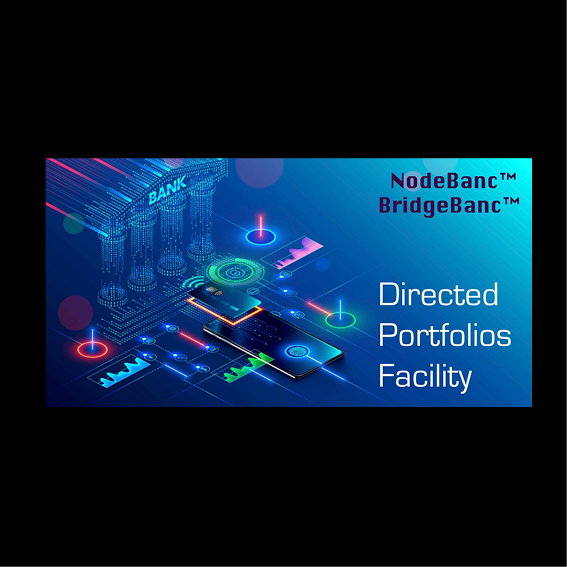
NodeBridge™ is a digital infrastructure designed to enhance operational efficiency, mitigate systemic risk, and drive revenue growth for depository institutions and other lending organizations. By leveraging advanced technologies such as Directed Portfolio Facilities (DPFs) and modular financial frameworks, NodeBridge™ enables institutions to optimize funding, manage risks, and comply with evolving regulatory standards.
Its adaptable design supports flexible funding solutions, including municipal funding, loan participations, and community-based economic development, providing a scalable foundation for sustainable financial growth.
The NodeBridge™ Initiative is the first step in building digital transformation infrastructure in local Communities across America.
The framework is adaptable to local healthcare, local insurance coverage availability and establishing 550+ Port Authority Opportunity Zones comprised of +|- 5 counties | parishes, as regional Communities in the United States and integration of 8,700+ Qualified Opportunity Zones.
Together, these two layers create a mesh where local Community Banks and regional BridgeBanc™ depository institutions align with county governments, private–public partnerships, and broader economic development efforts. The goal is not to overhaul the systems Community Banks already run, but to give them new channels — statutory, digital, and financial — to participate in larger, longer-horizon projects without leaving their community roots.
Port Authority Opportunity Zone (PAOZ)
Every county|parish in America is part of a broader economic region. The O|Zone™ Initiative organizes these into Port Authority Opportunity Zones (PAOZs) — clusters of 2–5 counties aligned under a shared authority structure.
A PAOZ is not just a map line. It’s a platform where local government authorities, community banks (NodeBanks™), and BridgeBanks™ can jointly finance long-term infrastructure and private–public partnerships. Each PAOZ operates through its own governmental authority, issuing tax-exempt and taxable bonds, granting digital medallions, and setting the framework for durable community investment.
For community banks, the PAOZ framework means direct access to municipal finance opportunities once dominated by larger institutions. For rating agencies and investment bankers, it provides a uniform, statutory framework where bonds, assets, and risks are organized under a consistent set of rules. And for counties, it re-establishes a trusted pipeline of financing for projects that expand economic, social, and environmental capacity, administered by local Community Banks.
Together, NodeBanc™ institutions, BridgeBanc™ entities, and Directed Portfolio Facilities form a layered structure that extends from the local bank branch to state-level banking frameworks. But these are not standalone pieces. They interlock into Ecosystems that allocate revenues, distribute Digital Medallions, and scale value across counties, states, and the nation. The next step is understanding how those Ecosystems fit together.
NodeBridge™ Ecosystems
The NodeBridge™ framework builds value through interconnected Ecosystems, each one designed to generate service revenues, allocate Digital Medallions, and reinforce community-centered finance. Value and revenue flow upward through these layers, creating durable streams for banks, communities, and their partners.
NodeBanc™ Ecosystem – Local community banks act as originators and custodians, earning service revenues through loan participations, custody arrangements, and fiscal agent roles.
BridgeBanc™ Ecosystem – State and PAOZ-level entities issue digital instruments, hold statutorily safe assets, and connect to federal and FHLB frameworks, while participating in digital tariff flows.
Directed Portfolio Facility (DPF) – A statutory platform linking municipalities, non-profits, and businesses, enabling issuance, participations, and long-term contracts, with fiscal integration through local Community Bank (NodeBanc™ depository) and BridgeBanc™ depository.
DPF Ecosystems – Advanced layers of digital infrastructure (quantum keys, CERs, digital twins, tariff rails) designed to secure, track, and allocate value across the network.
O|Zone™ Alliance-Level NodeBridge Stack – The national framework that ties Ecosystems together, ensuring consistent allocation and scaling impact across counties and states.
Digital Medallions function as the connective tissue across these layers, ensuring every Ecosystem participant—from the smallest NodeBanc™ to the national stack—shares in revenue and value creation.
ADC Principals are in the process of implementing NODEBRIDGE, as Sponsor for purposes of implementing NodeBanc™ and BridgeBanc™ Digital Transformation Initatives in 3300+ US Community depository institutions including provision of 30+ year subordinated debt debentures (a form of regulatory capital), an array of portfolio risk mitigation strategies, Directed Portfolios Facilities ("DPF") Digital Twin infrastructure, Volcker Rule Amendment Protocols and other inititiatives designed to increase services revenue for US Depository Institutions, expand lending activities beyond local deposit base, and transform economic impact within their local service areas.
Directed Portfolio Facilities (DPF) are designed to give Community Banks new channels to manage balance sheet risk, expand lending beyond their deposit base, and secure durable service-fee revenues. Built under statutory frameworks, DPFs create vehicles for loan participations, municipal issuances, and portfolio diversification while preserving local bank control. For bankers, this means access to capital relief, fee income, and new lending opportunities without changing existing systems — and the full details are available in the linked presentation. - Press the image below.
Press the image below.
Increased Regulatory Capital
Beyond regulatory capital, NodeBanc™ technology is designed to equip community banks with a suite of strategies that convert hidden balance-sheet potential into tangible strength. From risk-based portfolio optimization to expanded fee-driven revenues and access to digital twin infrastructure, these tools are designed to lower costs, unlock new income streams, and extend the reach of local banks far beyond their deposit base—without losing the community-rooted identity that defines them.
Portfolio Credit, Market and Operational Risk Mitigation
Enhanced Services Revenue
New Products and Services
Digital Transformation
NODEBRIDGE™ seeks to create an international depository custody bank ECOSYSTEM with an emphasis on directed portfolios facilities, digital asset services, traditional depository, custody and fiscal agent services, country central bank integration and an emphasis on services revenue programs and loan origination and distribution.
BridgeBanc™ represents one pillar of the NodeBridge Ecosystem. It is designed to connect local Community Banks with newly authorized, digitally integrated banks enabled under state and federal statutory frameworks. AD&C Principals are applying decades of experience—and the proven principles behind IAC Insurers—to these BridgeBanc™ institutions.
Much like IAC Insurers, BridgeBanc™ depository institutions cannot lend their deposits; instead, they are required to hold them exclusively in statutorily permitted safe assets such as U.S. Treasuries or Federal Reserve accounts.
Within the O|Zone™ Initiative, the plan is to form a BridgeBanc™ for each Port Authority Opportunity Zone (PAOZ), typically covering 2–5 counties.
Each BridgeBanc™ is to be capitalized at extraordinary levels, exceeding USD $100 million, and structured as a Subchapter S reporting Limited Liability Company with fewer than 100 local shareholders.
Shareholders benefit from investing synthetically in local tax-exempt municipal bonds through their ownership stake.
An initial mandate is to acquire tax-exempt municipal bonds issued by smaller, bank-qualified municipal issuers—bonds whose indenture custodian is the local Community Bank (a NodeBanc™), thus tightly linking municipal finance back to its community roots.
BridgeBanc™ institutions are further designed to operate with high levels of digital innovation and to evolve into AI-enabled DigitalTwin™ infrastructure. Over time, this framework will integrate with the federal Genius Act and other statutory digital asset legislation.
NodeBanc™ is the NodeBridge™ ecosystem name for a local Community Bank within an O|Zone™ designated county. It restores the bank’s central role in municipal finance while equipping it with digital infrastructure, risk-management tools, and revenue models once limited to the largest institutions.
Through the NodeBridge™ DX-CD Program, each NodeBanc™ can access 30-year regulatory capital via subordinated debentures tied to government rates, while benefiting from enhanced risk-based capital treatment, loan participations, and expanded lending.
Directed Portfolio Facilities ("DPF") Digital Twin infrastructure and Volcker Rule compliance protocols open new product sets and recurring service revenues beyond the local market, with added advantages from Opportunity Zone tax incentives.
NODEBRIDGE™ USA is coordinating with O|Zone™ Initiative, sponsored by Alasdair Douglas & Co.
This economic development framework is designed to facilitate implementation of Qualified Opportunity Zone and other Community-centric quality of life enhancement initiatives through a new approach to Private | Public | Partnerships and Community Funding.
AD&C Principals have a legacy of pioneering innovative funding solutions for government authorities. In 1989, they created the first secondary-market bondholder insurance for unrated and non-investment grade municipal bonds, issued by special-purpose insurers (“IAC Insurers”), an innovation that received AAA ratings from Standard & Poor’s. AD&C infrastructure subsequently became one of the three largest municipal bond brokers (a form of municipal bond exchange) in the United States.
This long track record in municipal finance now underpins the development of the O|Zone™ Initiative—a modern program designed to restore and expand the role of local community banks in municipal finance, a role they played prominently before the 1986 Tax Reform Act. The Initiative is structured to generate long-term service revenues for banks, provide counties with a stable financing partner, and reconnect local financial institutions to community development at scale.
Extending this legacy, AD&C Principals are now implementing NodeBridge™—a digital transformation framework that equips local community banks with the same caliber of balance-sheet tools, digital infrastructure, and regulatory innovations once reserved for the largest global banks.
In a return to pre-1986 Tax Reform Act, NODEBRIDGE™ participating Depository Institutions have opportunities to facilitate depository, custody, and fiscal agent services for each O|Zone™ Municipal Obligation issued by a Government Authority in their local area.
A NODEBRIDGE™ objective is to enroll at least 1 participating Depository Institution in each county|parish across the United States.
Each participating Depository Institution has the opportunity to become a primary source of funding, depository and fiscal administration for implementation of each O|Zone™ Initiative for private and public participants in their local service area within a Port Authority Opportunity Zone.
The Initiative is designed to: